

The Rise of Automated Fetch
Finding enough time to play fetch with our dogs is a common struggle for owners. Busy schedules and fatigue often get in the way of providing the exercise our pets need.
Fetch toys have evolved from sticks to complex interactive devices. Early automated options, like mechanical ball launchers, could fling a ball but needed constant reloading and lacked any intelligence, still requiring significant owner effort.
Today's automated fetch solutions go beyond simple launching. They use artificial intelligence, vision systems, learning algorithms, and connectivity to create an interactive experience, transforming a mechanical device into a smart playtime companion.
These machines offer a way to keep energetic dogs stimulated when owners can't play. They supplement, rather than replace, human interaction, providing an outlet for energy and a way to combat boredom, ultimately improving a dog's quality of life.
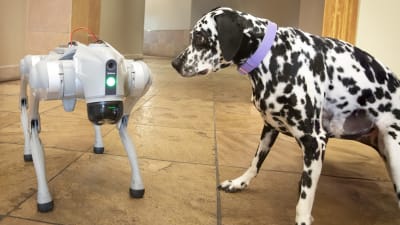
Vision Systems and Canine Safety
Safety is the primary concern with automated fetch machines. Developers address the risks of a high-speed projectile near a pet by incorporating sophisticated vision systems into their designs.
A 2024 Boston University paper on automatic dog ball throwers emphasized visual tracking. Researchers developed a system using cameras and image processing to confirm a dog's location before launching a ball, preventing accidental launches at the animal.
Accurately tracking a moving dog in different lighting and environments is challenging. Outdoor use, with its shadows, glare, and changing backgrounds, complicates reliable tracking. Systems use RGB cameras and depth sensors for distance information and improved accuracy.
Many systems include emergency stop mechanisms that halt the launch if the dog enters an unsafe position mid-sequence. The reliability of these safety features depends on sensor quality, algorithm sophistication, and mechanical responsiveness. While not fully solved, the technology is advancing quickly.
- Cameras capture visual data.
- Image processing algorithms identify the dog's location.
- Depth sensors provide distance information.
- Emergency stop mechanisms halt launch if unsafe.
Current Market Offerings (2024-2025)
The AI-powered dog fetch machine market is young but expanding rapidly in late 2024 and early 2025. While many devices are listed as 'automatic,' not all use AI; some are simply timed launchers.
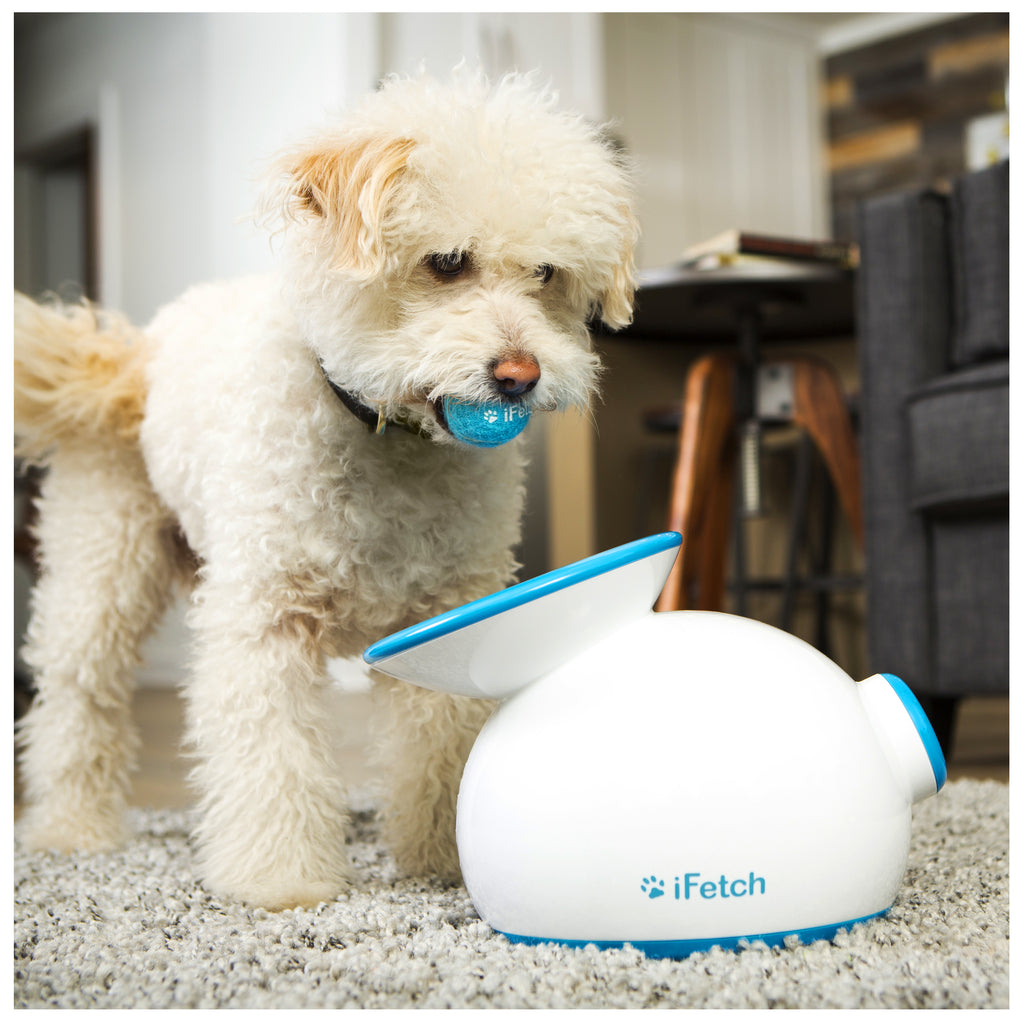
iFetch offers models like the iFetch and iFetch Too, focusing on consistent launch distances and ball compatibility. The iFetch Too is for larger dogs using standard tennis balls, while the original iFetch suits smaller breeds with proprietary balls. Prices range from $150 to $300.
Machines designed for longer range and outdoor use often use AC power adapters due to battery limitations. Launch distances range from 20 to over 100 feet, with some models offering adjustable angles and speeds for customization.
Owner reviews are mixed. While convenience and entertainment are praised, common complaints involve reliability, inconsistent launches, and dogs struggling to learn how to use the device. Some machines also have issues with specific ball types or terrain. Prices range from about $100 for basic models to over $400 for feature-rich options.
AI-Powered Dog Fetch Machines - November 2024 Comparison
| Brand | Price Range (USD) | Indoor/Outdoor | Range | Ball Size | Key Features |
|---|---|---|---|---|---|
| Fetchomatic | 200 - 300 | Indoor/Outdoor | Approximately 20-40 feet | Standard Tennis Ball Size | Adjustable launch distance, multiple speed settings, safety sensors. |
| iFetch Too | 230 - 280 | Outdoor | 10-30 feet | Chuckit! Compatible Balls | Durable design, automatic shut-off, rechargeable battery. |
| All for Paws AFP Automatic Ball Launcher | 150 - 250 | Indoor/Outdoor | 15-30 feet | Standard Tennis Ball Size | Adjustable launch distance, includes three balls, timer settings. |
| PetSafe Automatic Ball Launcher | 220 - 320 | Indoor/Outdoor | Up to 25 feet | Standard Tennis Ball Size | Multiple distance and speed settings, motion sensor, safety features. |
| WOOFLINK Automatic Dog Ball Launcher | 180 - 270 | Indoor/Outdoor | 16-32 feet | Standard Tennis Ball Size | Remote control, adjustable launch angles, automatic shut-off. |
Illustrative comparison based on the article research brief. Verify current pricing, limits, and product details in the official docs before relying on it.
The Intelligence Layer: Beyond Simple Launching
The true potential of AI fetch machines is to move beyond simple launching, creating an intelligent experience that adapts to a dog's behavior and offers personalized training. However, most machines in early 2025 remain basic in this aspect.
Some machines use learning algorithms to adjust launch distance based on a dog's speed and location, aiming to keep them engaged by varying the challenge. For instance, faster retrievals might trigger longer launches. Algorithm effectiveness varies, and owners often find adjustments subtle.
Training modes are emerging, which may gradually increase launch distance or vary launch angles to challenge dogs and improve retrieval. More advanced features could identify behavioral patterns, like a consistent left veer during retrieval, and adjust launches accordingly.
Significant advancements are expected in creating personalized fetch experiences tailored to individual dogs. The challenge lies in developing robust algorithms that can handle unpredictable dog behavior and adapt to each dog's unique learning patterns.
Is an AI Fetch Machine Right for Your Dog?
AI-powered fetch machines are poised to revolutionize canine training and playtime. But are they the right fit for *your* furry friend? This quick quiz will help you assess whether an AI fetch machine would be a beneficial addition to your dog's life, and yours!
Data Privacy and Connectivity Concerns
As fetch machines become more connected, data privacy is a concern. Tracking dog activity like launch frequency, retrieval speed, and distance covered could be valuable to manufacturers or vulnerable to unauthorized access.
Understanding what data is collected, how it's stored, and if it's shared with third parties is essential. Owners should carefully review manufacturers' privacy policies, which can often be complex.
undefined
Currently, data collection practices vary widely. Some manufacturers claim to anonymize and aggregate data for research purposes, while others use data to personalize the user experience. It’s a rapidly evolving area, and regulatory oversight is still catching up. Transparency and user control over data are paramount.
2026 Predictions: Smarter, Safer, More Integrated
Looking ahead to 2026, I anticipate significant advancements in AI-powered dog fetch technology. We’ll likely see more sophisticated AI algorithms that are capable of learning and adapting to individual dog behavior with greater accuracy. This will lead to more personalized and engaging fetch experiences.
Safety features will continue to improve. Expect to see more advanced vision systems that can accurately track dogs in a wider range of conditions, as well as more robust emergency stop mechanisms. Integration with wearable technology, such as GPS trackers, could provide additional safety features, such as geofencing and alerts if the dog strays too far.
Connectivity will become more prevalent. Smartphone apps will likely offer remote control and monitoring capabilities, allowing owners to adjust launch settings, track activity levels, and even initiate fetch sessions remotely. Integration with other smart home devices, such as voice assistants, could also become commonplace.
I also predict we'll see machines that can automatically adjust to different ball types and sizes, eliminating the need for manual adjustments. Furthermore, the ability to recognize multiple dogs and tailor the experience to each one will be a significant step forward. Gamification – incorporating fetch-based games and challenges – is another likely development.
Beyond Fetch: The Future of Canine Robotics
The technology behind AI-powered fetch machines has implications that extend far beyond simply launching a ball. It represents a broader trend towards canine robotics – the development of robotic companions designed to enhance the lives of dogs and their owners.
We could see robotic companions that can play multiple games, provide mental stimulation, and even assist with basic obedience training. These robots might incorporate features such as treat dispensers, interactive puzzles, and voice commands. The potential for improving a dog’s quality of life is substantial.
However, it’s important to acknowledge the ethical considerations. As canine robots become more sophisticated, we need to consider the potential impact on the human-animal bond. Will these robots replace human interaction, or will they simply supplement it? It’s a question that requires careful thought.
The development of increasingly sophisticated canine robots raises broader questions about the role of technology in our relationships with animals. While the potential benefits are clear, it’s important to proceed with caution and ensure that these technologies are used responsibly and ethically. Ultimately, the goal should be to enhance the well-being of our canine companions, not to replace the unique connection we share with them.
What is the most exciting potential application of AI in dog training and enrichment?
AI technology is rapidly changing the way we train and engage with our dogs. From smart fetch machines that adapt to your dog's skill level to health monitoring systems that track activity in real time, the possibilities are expanding every year. We want to hear from you — which AI-powered innovation are you most excited about for your canine companion? Vote below and share your thoughts in the comments!

No comments yet. Be the first to share your thoughts!