
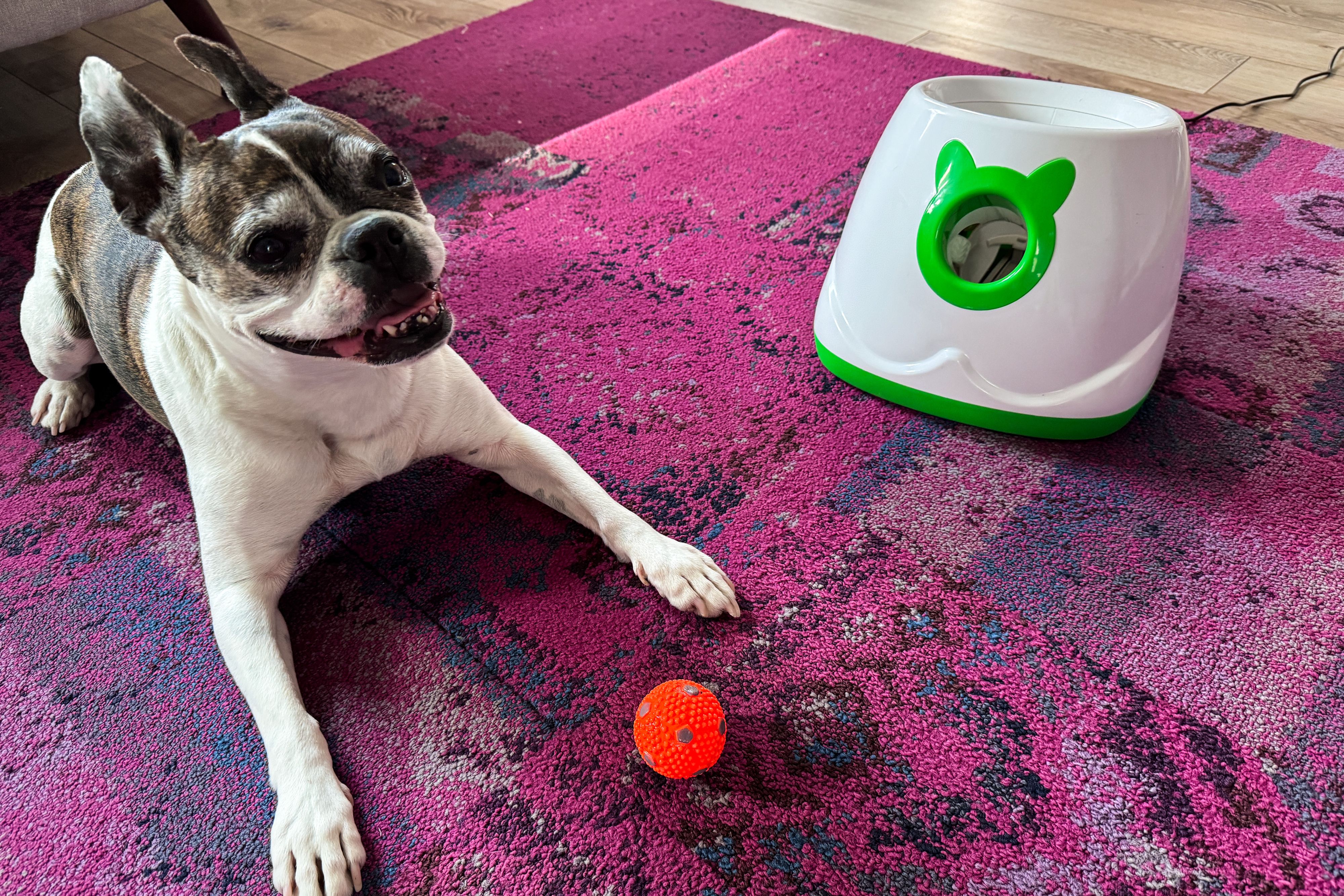

Set up the fetch zone
Older dogs need a predictable environment to learn new movements without stressing their joints or confusing their senses. A cluttered room invites tripping hazards and distraction, so start by clearing a straight, open path at least 10–15 feet long. Remove toys, rugs with slippery edges, and any furniture that blocks the line of sight between you and the launcher. The goal is a clean runway where the only variable is the ball.
Place the launcher on a stable, flat surface. If the floor is hardwood or tile, ensure the base is secure so it doesn’t slide during the launch. For dogs with arthritis or hip dysplasia, keep the launch angle low and the distance short. You want the dog to jog, not sprint or jump awkwardly. A calm, quiet corner of the house works best; avoid high-traffic areas where family members might walk through the training zone.
Once the space is clear, test the launcher without the dog present. Check that the ball launches smoothly and lands predictably within the open path. Adjust the angle if the ball rolls into a wall or under a couch. This setup phase takes less than five minutes but prevents frustration later. A well-prepared zone makes the training session feel like a game rather than a chore for your senior companion.
Teach the recall command
Before introducing the fetch object, you must establish a reliable recall. Older dogs often have slower reflexes or stiff joints, making it difficult for them to pivot quickly when called. A solid "come" behavior ensures your dog returns to you safely and eagerly, creating the foundation for the fetch game.
Start in a quiet, low-distraction area. Use a long leash to gently guide your dog back to you if they hesitate, rewarding them immediately upon arrival. Consistency is key; use the same clear cue word every time. This builds a strong association between the command and the positive outcome of returning to your side.
Once your dog reliably comes to you on cue, you can begin integrating the launcher. Hold the device at a short distance and call your dog. When they arrive, praise them and offer a treat. This step bridges the gap between basic obedience and the specific task of retrieving, preparing them for the physical activity ahead without overwhelming their senses.
Launch and retrieve the ball
Setting up the launcher is only half the battle; guiding your older dog through the actual launch and retrieve sequence requires patience and clear cues. Older dogs may have slower reflexes or joint stiffness, so the goal is to build confidence before expecting a full sprint. Start with short, low-impact throws to protect their hips and knees while they learn the rhythm of the game.
1. Let the dog watch the launch
Before expecting a chase, let your dog observe the machine in action. Stand to the side and activate the launcher to launch a ball while your dog watches from a safe distance. This helps them associate the mechanical sound and motion with the ball’s trajectory without the pressure to move immediately. If your dog seems startled by the noise, keep the initial distance greater and reward calm behavior with treats.
2. Guide the dog to chase
Once your dog is comfortable watching, encourage them to follow the ball. Use a happy, encouraging voice and point toward where the ball landed. For older dogs with limited mobility, aim for short distances (5–10 feet) to avoid overexertion. If they hesitate, gently guide them with a leash or by walking alongside them, celebrating any movement toward the ball. The focus here is on engagement, not speed.
3. Encourage the return with the ball
The final step is teaching your dog to bring the ball back. Older dogs may drop the ball or lose interest if the retrieve feels like a chore. Use a high-value reward, such as a favorite toy or extra-tasty treat, placed near you before they arrive. When they drop the ball, praise enthusiastically and immediately offer the reward. If they struggle to pick up the ball due to age-related issues, gently lift it for them and reinforce the drop-to-reward cycle. Consistency turns this into a predictable, enjoyable routine rather than a physical test.
Integrate leash training cues
The structured nature of fetch training provides a natural framework for reinforcing leash manners. Because the launcher requires the dog to stay focused on the toy rather than the environment, it acts as a behavioral anchor. This focus helps older dogs maintain impulse control even when distractions arise nearby.
Start by attaching the leash and clipping it to the collar before introducing the launcher. Hold the device close to your dog’s nose to capture attention, then take a single step forward. If the dog follows without pulling, reward immediately with the toy. This one-step method builds the association that moving with you leads to the game.
As the dog becomes comfortable, gradually increase the distance between you and the toy. Use the retrieval mechanism to encourage the dog to return to your side rather than running past you. Each successful return strengthens the "come" cue and reduces loose-leash wandering. Keep the energy high but controlled to prevent overexcitement.
If the dog pulls, stop moving immediately. Wait for the leash to slacken before taking another step. Consistency is key; never allow pulling to result in forward progress. Over time, the dog will learn that staying close to your side is the most effective way to engage with the launcher and continue the game.
Link fetch to potty breaks
Integrating fetch sessions with your older dog’s potty routine creates a predictable daily structure. This consistency reduces anxiety and clarifies expectations for senior dogs, whose energy levels and bladder control may vary. By pairing physical activity with biological needs, you help regulate their internal clock.
The Morning Routine
Start the day by taking your dog to their designated potty spot immediately upon waking. Allow them time to eliminate without distraction. Once they are finished, transition directly into a short fetch session. Use the launcher to launch a ball or toy just a few feet away. This gentle start provides mental stimulation and light exercise without overwhelming a senior dog. The clear sequence—potty first, play second—reinforces that the yard is a functional space.
The Evening Wind-Down
In the evening, follow the same pattern but with a lower intensity. After the final bathroom break, engage in a brief, calm fetch game. Keep the sessions short, lasting only two to three minutes. This helps burn off residual energy before bedtime, promoting deeper sleep. Avoid vigorous play right before rest, as it may keep your older dog too alert. The goal is a gentle cooldown that signals the end of the day.
Consistency Is Key
Stick to this routine every day. Older dogs thrive on repetition. If you change the order or skip the fetch session, your dog may become confused or restless. Over time, the association between the potty break and the fetch game will become automatic. This structured approach not only aids in house training but also strengthens your bond through shared, predictable activities.
Troubleshoot common fetch errors
Older dogs often hit snags when learning to fetch with the launcher. Their bodies and minds work differently than younger dogs, so patience and observation are essential. If your dog stops responding, check these three common issues before adjusting the device settings.
Joint pain or stiffness If your dog hesitates to run or returns slowly, they may be in discomfort. Stop the session immediately and let them rest. Switch to a softer, lighter ball that requires less grip strength. Consider using the launcher on a "short toss" setting to minimize the distance they need to travel. Consult your veterinarian if stiffness persists, and always keep sessions short—five minutes or less—to protect their joints.
Confusion with the machine's sound The mechanical whirring of the launcher can startle sensitive senior dogs. If your dog freezes or looks toward the machine with fear, move it further away or cover the motor housing with a thin cloth to dampen the noise. Pair the sound with high-value treats to create a positive association. Gradually decrease the distance between the dog and the machine only when they remain calm and relaxed.
Loss of interest or boredom Older dogs may lose focus if the game becomes repetitive. Change the location of the launcher to keep the environment novel. Use different types of balls or toys to maintain curiosity. If your dog walks away, end the session on a positive note with a brief play period rather than forcing them to complete the fetch. Consistency matters more than duration; short, frequent sessions work best for aging dogs.
Finalize the training routine
Consistency is the engine that keeps your older dog’s fetch skills moving. Once the basics are solid, shift from active teaching to maintenance. A predictable daily rhythm helps senior dogs retain memory without physical strain.
Use this checklist to ensure every session hits the right notes:
-
Set up launcher and check battery
-
Warm up with a short recall game
-
Run 3-5 low-impact fetch rounds
-
End with a calm leash walk
-
Schedule a rest break
Keep sessions short—five to ten minutes is plenty for an older dog. If the dog loses interest or shows signs of stiffness, stop immediately. The goal is positive association, not endurance. By sticking to this routine, you turn a temporary lesson into a lifelong habit.
Far fetchers training: what to check next
Training an older dog to fetch with the launcher often raises specific concerns about comfort and learning speed. Here are answers to the most common questions about using this tool with senior dogs.
No comments yet. Be the first to share your thoughts!