
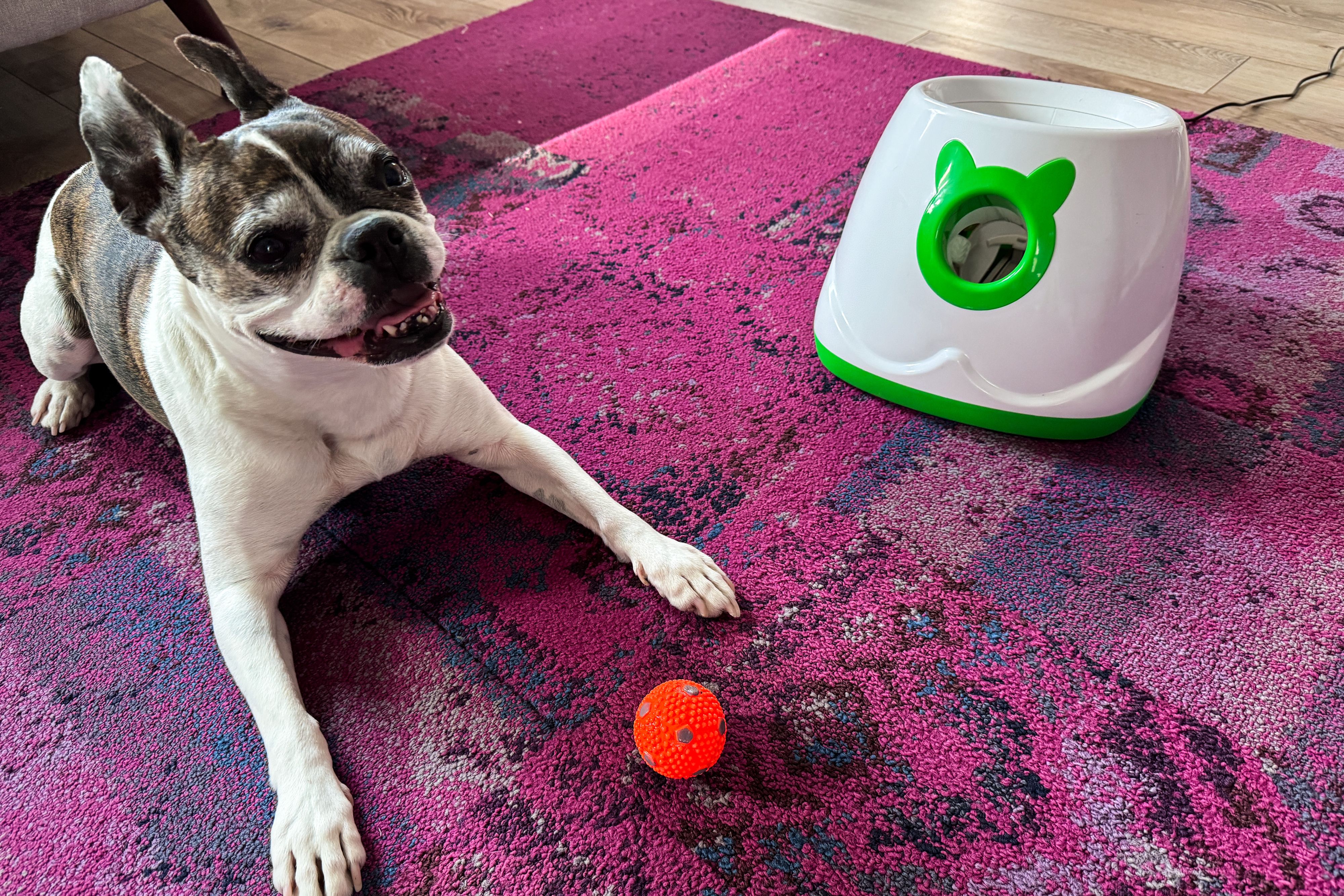

Why use a Far Fetcher for training
Manual fetch is unpredictable. You have to wind up, throw, retrieve the ball, and repeat. This rhythm breaks your dog’s focus and leaves your shoulder aching after twenty minutes. A Far Fetcher machine changes the dynamic by removing the human variable. It becomes a dedicated fetch partner that never gets tired, never misses a throw, and never varies the trajectory.
The primary value of an automated fetch machine lies in consistency. Dogs learn through repetition. When every ball travels at the same speed, angle, and distance, your dog can refine their tracking and catching mechanics without guessing where the ball will land. This repetitive precision builds muscle memory faster than sporadic manual play.
Far Fetchers provide consistent ball trajectory and timing, reducing strain on your arm while keeping your dog engaged in repetitive fetch drills.
Beyond training precision, these machines offer high-intensity exercise with zero physical effort from you. You can set the timer and distance, then sit back while your dog runs laps. This is particularly useful for high-drive breeds that need more exercise than a simple walk can provide. The machine handles the labor, allowing you to supervise safety and reinforce commands like "drop it" or "wait" without the distraction of chasing the ball yourself.
Choose the right ball and machine setting
Before you turn on your Far Fetcher machine, you need to match the launcher to the right ball and set the correct power level. Using the wrong combination can jam the mechanism or, worse, cause the ball to shoot unpredictably. Start by checking the size and weight of the ball. Most automatic launchers work best with standard tennis balls or durable rubber balls that fit snugly but not tightly into the loading chamber. If the ball is too small, it may fall through the gears; if it’s too large, it can strain the motor.
Once you have the right ball, set the machine to its lowest distance setting. This allows your dog to see the ball land clearly and understand the connection between the launch and the retrieval. Place the ball in the chamber, close the lid securely, and test the launch yourself first. Stand back and ensure the trajectory is stable and safe. If the ball wobbles or the machine makes grinding noises, stop immediately and check the ball size.
After confirming the machine works safely, let your dog investigate the stationary launcher. Let them sniff and lick the ball while it sits in the chamber to build positive associations. Once they are comfortable, set the machine to the lowest power setting and trigger a launch. Keep the session short and positive, rewarding your dog every time they return the ball. As your dog gains confidence and coordination, you can gradually increase the distance and speed settings over several sessions.
Step 1: Introduce the machine sound
Before the Far Fetcher launches a ball, you must teach your dog that the machine’s noise is a signal for good things, not a threat. Many dogs startle at the mechanical whir of the motor or the sudden thwack of the ball release. This desensitization phase bridges that gap by pairing the sound with high-value rewards, ensuring your dog associates the Far Fetcher with excitement rather than fear.
1. Position the machine off
Place the Far Fetcher in its permanent training spot, but keep it unplugged and turned off. This allows your dog to investigate the object without the anxiety of its operation. Let your dog sniff and circle the machine while you feed small, tasty treats near the base. The goal is to make the machine itself a neutral or positive part of the environment.
2. Add the sound without launching
Once your dog is comfortable standing near the powered-off machine, plug it in but do not activate the launch mechanism. Turn the motor on for just two or three seconds, then immediately turn it off and toss a treat toward your dog. Repeat this cycle, gradually increasing the duration the motor runs before delivering the reward. Watch your dog’s body language closely; if ears pin back or they retreat, return to shorter durations.
3. Pair the launch sound with treats
When your dog remains calm during the motor run, press the launch button to fire a ball, but have a helper or you immediately follow up with a treat thrown in the opposite direction. This teaches that the whoosh of the launch is followed by something even better than the ball. Keep the initial sessions short—five minutes or less—to prevent overstimulation or frustration.
4. Build positive association
Gradually increase the distance between the treat delivery and the machine as your dog shows confidence. You might stand slightly further away while the Far Fetcher cycles, rewarding your dog for staying focused on you rather than fixating on the device. Consistency is key; practice this routine daily until your dog wags their tail or leans in when they hear the motor start.
Launch balls for the first time
The Far Fetcher machine is a powerful tool, but it can overwhelm a dog if used too aggressively. For this first session, your goal is not distance; it is association. You want your dog to link the mechanical launch with the reward of chasing. Start by setting the Far Fetcher to its lowest power setting. Place it on flat, open ground where a ball will roll predictably without hitting obstacles.
Stand behind the machine with your dog on a loose leash or off-leash in a secure area. Hold a high-value treat in one hand and keep the other hand free to operate the launch trigger. Do not let your dog see you load the ball yet. Let them sniff the machine and explore the environment to reduce any initial wariness of the device.
Once your dog is calm and focused, load a single ball into the hopper. Get your dog’s attention with a quick cue like "watch me," then immediately press the launch button. The ball should travel only 10 to 15 feet. The moment the ball leaves the barrel, encourage your dog to chase it with an excited "go get it!" voice.
When your dog retrieves the ball, celebrate enthusiastically. Use praise and the treat you have been holding. Do not try to reload the machine immediately. Let the dog bring the ball back to you, take it, and receive the reward. This positive reinforcement loop teaches the dog that the loud noise and fast movement of the Far Fetcher are the start of a fun game, not a scary event.
Repeat this short sequence 5 to 10 times. Keep the sessions brief, ideally under 10 minutes, to maintain your dog’s interest. If the dog seems hesitant, increase the praise and treats. If they are chasing eagerly, you can slightly increase the distance in the next session. The key is to end on a high note before the dog loses focus.
Step 3: Teach the drop and reload
Once your dog reliably brings the ball back, the final piece of the puzzle is teaching them to drop it directly into the Far Fetcher’s hopper or a designated reload spot. This step transforms a simple game of chase into an automated loop, allowing for continuous play without you having to bend down or manually reload the machine.
Start by placing the Far Fetcher unit in its permanent spot. If you are using a specific drop zone, mark it clearly with a mat or tape. Hold a treat in your hand near the machine’s opening. When your dog approaches with the ball, wait for them to pause. Do not reach for the ball yourself; let them make the choice to drop it into the target area.
As soon as the ball hits the hopper or touches the designated spot, mark the behavior with a clicker or a sharp "yes" and immediately give the treat. If your dog tries to hand you the ball instead, gently guide them toward the machine. Repeat this process until the dog associates the machine’s opening with the reward. Consistency here is key to building the habit of independent reloading.
Fix Common Fetching Mistakes
Even with a reliable Far Fetcher, training hiccups happen. When your dog ignores the ball or the machine jams, pause and adjust your approach. These fixes keep the session moving and the dog engaged.
Ball Avoidance
If your dog sniffs the ball but walks away, the launch might be too startling. Lower the launch distance to just a few feet. Let the dog approach the ball at their own pace. Reward any interaction with praise. Gradually increase the distance as confidence builds. Never force the dog to chase a ball that feels unsafe.
Over-Excitement
High arousal can lead to biting the launcher or ignoring commands. If your dog is jumping or barking, stop the machine immediately. Wait for a calm stance before reloading. Use a "settle" cue to lower energy. Only resume when the dog is focused on you, not the ball. Consistency here prevents bad habits.
Machine Jams
A jammed Far Fetcher breaks the flow of play. Check for debris in the launch tube before every session. Ensure the ball is the correct size and not overly worn. If a jam occurs, turn off the power before clearing it. Use a soft brush to remove lint or hair from the mechanism.
-
Inspect ball for cracks or excessive wear
-
Clear debris from the launch tube
-
Verify battery or power source is charged
Watch the fetch flow in action
Seeing the sequence helps you replicate it. The video below captures the ideal rhythm between your dog and the Far Fetcher machine.
Notice how the dog waits for the ball to launch before sprinting. The machine cycles smoothly, and the dog returns the ball to the drop zone without hesitation. This visual reference shows the natural loop of fetch that you are building toward.
Far fetcher training: what to check next
When integrating an automated fetcher into your routine, specific concerns about safety and logistics often arise. Here are the most common questions regarding ball compatibility, session duration, and safety protocols.
Can I use any tennis ball?
No. The Far Fetcher machine is calibrated for standard-sized tennis balls. Smaller balls may jam the hopper, while larger or worn-out balls can cause mechanical failure. Always inspect balls for cracks or excessive fuzz before loading them to ensure smooth operation.
How long should each session last?
Start with short, 10-minute sessions. This prevents your dog from becoming overly excited or frustrated before they understand the machine’s rhythm. Gradually increase the duration as your dog demonstrates consistent focus and calm behavior around the device.
Is the Far Fetcher safe for indoor use?
The Far Fetcher is designed for controlled environments. Ensure the launch path is clear of furniture, people, and fragile items. Supervise all initial interactions to verify your dog retrieves the ball without aggression toward the machine. Always unplug the device when not in use.
No comments yet. Be the first to share your thoughts!