
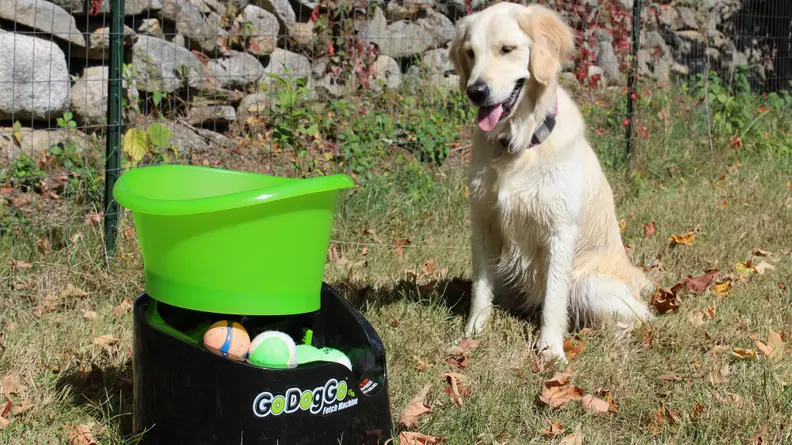

Start with the machine off
Before you introduce motion, your dog needs to see the fetch machine as a neutral part of the environment, not a threat or a mystery. Desensitization is the foundation of successful training. If your dog is hesitant or fearful of the static object, introducing the ball or ball-launching mechanism will only amplify that anxiety. The goal is to create a calm baseline where the machine is simply furniture until explicitly cued.
Place the fetch machine in a low-traffic area where your dog already feels comfortable, such as a corner of the living room or a quiet patch of the yard. Ensure the power cord is tucked away or secured so it doesn’t become a tripping hazard or an interesting chew toy during this phase. The machine should remain completely powered off. Do not plug it in yet. This removes the potential for unexpected noises or mechanical movements that could startle your dog before they are ready.
Allow your dog to approach the machine at their own pace. They may sniff it, circle it, or ignore it entirely. This is normal. Do not force interaction. If your dog approaches, you can mark the behavior with a calm "yes" or a treat, but keep the pressure low. The machine is just an object. By letting your dog investigate it on their own terms, you build positive associations without triggering a flight response.
Once your dog is consistently comfortable near the machine—sniffing it, lying near it, or even resting their chin on it—you are ready to move to the next step. If your dog shows signs of stress, such as tucked tail, whale eye, or avoidance, increase the distance between them and the machine and proceed more slowly. Patience here saves time later.
Introduce the ball launch sound
Before the machine ever fires, your dog needs to understand that the mechanical noise is a signal for fun, not a threat. The sudden whir of a motor or the thwack of a projectile can startle a sensitive dog, breaking their focus before the game even begins. This phase is about classical conditioning: pairing the scary sound with something they love.
Set up your Far Fetchers machine in a quiet room. Place it on the floor, away from your dog. Load a ball, but do not turn the machine on yet. Instead, stand a few feet away with a high-value treat or a favorite toy. When your dog looks at the machine, click a clicker (or say "yes") and immediately give them the treat. Repeat this until they look at the machine with anticipation rather than fear.
Once your dog is comfortable looking at the idle machine, introduce the sound without the launch. Press the trigger button so the motor whirs or the internal mechanism clicks, but keep the ball locked inside. Immediately after the sound, reward your dog with a treat. If they flinch, move further away and try again. The goal is to make the noise predict the reward, not the movement.
Now, combine the sound with the ball visible in the chute. Trigger the machine so the ball launches, but ensure it lands softly right next to your dog. Do not let it roll away. As soon as the ball lands, praise your dog and let them retrieve it. If the ball is too far, use a remote-launch feature or manually place it nearby. The key is that the ball always appears right after the sound, reinforcing the connection.
Keep these sessions short—two to three minutes at a time. End on a positive note while your dog is still interested. If your dog shows signs of stress, such as tucked tail, lip licking, or avoiding eye contact, stop immediately and go back to the previous step. Consistency is more important than speed here. By the end of this section, the sound of the Far Fetchers should make your dog’s ears perk up, not flatten.
Practice short distance retrieves
Start with short throws to build confidence. The fetch machine is a new tool, and your dog needs to understand how it works before adding distance. A short throw keeps the ball close, making it easy for your dog to find and return it. This builds a strong foundation for longer retrieves later.
Step 1: Set up in a quiet area
Choose a quiet room or a small, enclosed yard. Remove distractions like toys or other pets. Place the fetch machine on a flat surface. Make sure the area is large enough for a short throw but small enough to keep your dog focused.
Step 2: Load the machine with a high-value treat
Load the machine with a high-value treat or a ball your dog loves. This creates a positive association with the machine. Your dog will learn that the machine is a source of good things. Use a treat your dog rarely gets to keep their interest high.
Step 3: Trigger the machine for a short throw
Stand a few feet away from your dog. Trigger the machine to throw the ball a short distance, about 5-10 feet. Keep the throw low and direct. This helps your dog see exactly where the ball lands. A short, clear throw makes it easier for your dog to track the ball.
Step 4: Encourage the retrieve
As soon as the ball lands, encourage your dog to go get it. Use an excited tone of voice. Say "go get it" or use a cue you already use for fetch. Wait for your dog to pick up the ball. If they hesitate, point to the ball or take a few steps toward it to guide them.
Step 5: Reward the return
When your dog returns the ball, reward them immediately. Give them a treat and praise them enthusiastically. This reinforces the behavior of bringing the ball back to you. Make sure the reward is given right after the return to create a clear connection.
Step 6: Repeat and gradually increase distance
Repeat the process several times. Once your dog is consistently retrieving the ball from short distances, gradually increase the distance. Add a few feet at a time. If your dog struggles, go back to the previous distance. The goal is to build confidence, not frustration.
Step 7: End on a positive note
Always end the training session on a positive note. Stop before your dog loses interest. This keeps them eager for the next session. A short, successful session is better than a long, frustrating one. Your dog will learn to associate the fetch machine with fun and success.
Adjust for older dog mobility
Senior dogs often have arthritis, hip dysplasia, or general stiffness that makes high-impact jumping painful. A fetch machine can still provide mental stimulation and light exercise, but you must modify the setup to protect their joints. The goal is to keep the play low-impact and the retrieval easy on the body.
Lower the launch height
High launches force your dog to jump or stretch awkwardly to catch the ball. For older dogs, set the machine to launch the ball at ground level or just slightly above the ground. This allows them to chase and pick up the ball without straining their spine or hips. If the machine allows, aim the launch angle downward so the ball lands closer to where they are standing.
Use softer, lighter balls
Standard tennis balls can be heavy and hard on the teeth and gums. Switch to a softer, lighter foam ball or a specialized senior dog toy. These are easier to carry and less likely to cause injury if the dog bumps into furniture or walls while retrieving. A lighter ball also reduces the impact if the dog accidentally catches it at a higher angle.
Shorten the play sessions
Older dogs tire faster and may not have the stamina for long fetch rounds. Keep sessions short—5 to 10 minutes is often enough. Watch for signs of fatigue like heavy panting, lagging behind, or lying down. Stop the session immediately if your dog seems uncomfortable. Consistent, gentle play is better than one exhausting session.
Monitor for pain
Watch your dog’s movement closely. If they hesitate to jump, limp, or whine, stop the activity. Consult your veterinarian before starting any new exercise routine, especially if your dog has a known joint condition. A vet can recommend specific modifications or supplements to support your dog’s mobility during play.
Troubleshoot common hesitation
If your dog backs away from the Far Fetchers machine, you are likely moving too fast. The device is loud, mechanical, and unpredictable. To a dog, it looks less like a toy and more like a strange beast. Patience is not just a virtue here; it is the only way to build trust.
Do not force interaction. If your dog shows signs of stress—whining, cowering, or avoiding eye contact—stop immediately. Retreat to the previous step and lower the intensity. You are reverse-engineering the training by breaking the process down into micro-steps.
Reset the Environment
Start with the machine turned off and in a quiet room. Remove all distractions so your dog can focus solely on the device. Let your dog sniff the machine while it is still. This removes the auditory trigger that often causes fear.
Associate with High-Value Rewards
Once your dog is comfortable sniffing the static machine, begin feeding high-value treats near it. Start a few feet away and gradually move the treats closer over several sessions. The goal is to create a positive association. The machine predicts good things, not noise.
Introduce Sound at a Distance
Turn the machine on in another room or at the lowest volume setting. Allow your dog to hear the sound while eating. If they remain calm, move the machine closer in subsequent sessions. Never turn the machine on directly next to a hesitant dog.
Encourage Approach with Movement
When your dog approaches the running machine without fear, use a long line to guide them gently if needed. Toss a treat away from the machine to keep the focus on the reward, not the noise. This teaches them that the machine is a tool for fun, not a threat.
Final checklist for safe play
Before letting your dog roam free with the fetch machine, run through this quick verification. Independent play should feel like a game, not a chore or a hazard. If any step feels off, stick to supervised sessions until your dog is fully confident.
- Batteries charged: Ensure the device is fully powered to prevent mid-game shutdowns.
- Ball size match: The ball must be large enough that it cannot be swallowed or lodged in the throat.
- Clear zone: Remove fragile items, toys, and obstacles from the launch radius.
- Secure placement: Position the machine on flat ground, angled slightly away from high-traffic walkways.
- Supervision ready: Always stay within arm’s reach during the first few independent sessions.
-
Batteries fully charged
-
Ball size appropriate for dog
-
Launch zone clear of obstacles
-
Machine stable and angled correctly
-
Owner present and attentive
Common questions about fetch machines
Here are answers to the most frequent questions about training your dog to use a fetch machine. These tips cover setup, safety, and troubleshooting to help you get the most out of your Far Fetchers.
Where to watch Farfetched tutorials
You can find official Farfetched content directly on YouTube. The channel hosts the animated pilot and related video resources that demonstrate the brand's visual style and operational concepts.
For a complete overview of available episodes and updates, visit the FarFetchedShow channel on YouTube. This is the primary hub for their video library.
No comments yet. Be the first to share your thoughts!