

Fetch & Flourishing: The Connection
Dogs have long been companions, but playing fetch offers measurable mental health benefits for both dogs and their owners. It's more than just a way to tire out a dog.
A 2024 study from the National Institutes of Health (PMC, n.d.) shows how dog ownership activities, like fetch, boost human wellbeing by combining physical activity, social interaction, and emotional connection.
Fetch works through physiological and psychological mechanisms. Physical exertion releases endorphins, interaction strengthens the bond, and the focused activity distracts from daily stressors.
Dogs have historically been integral to human survival and emotional support. Fetch taps into this ancient bond, offering a modern expression of this relationship.
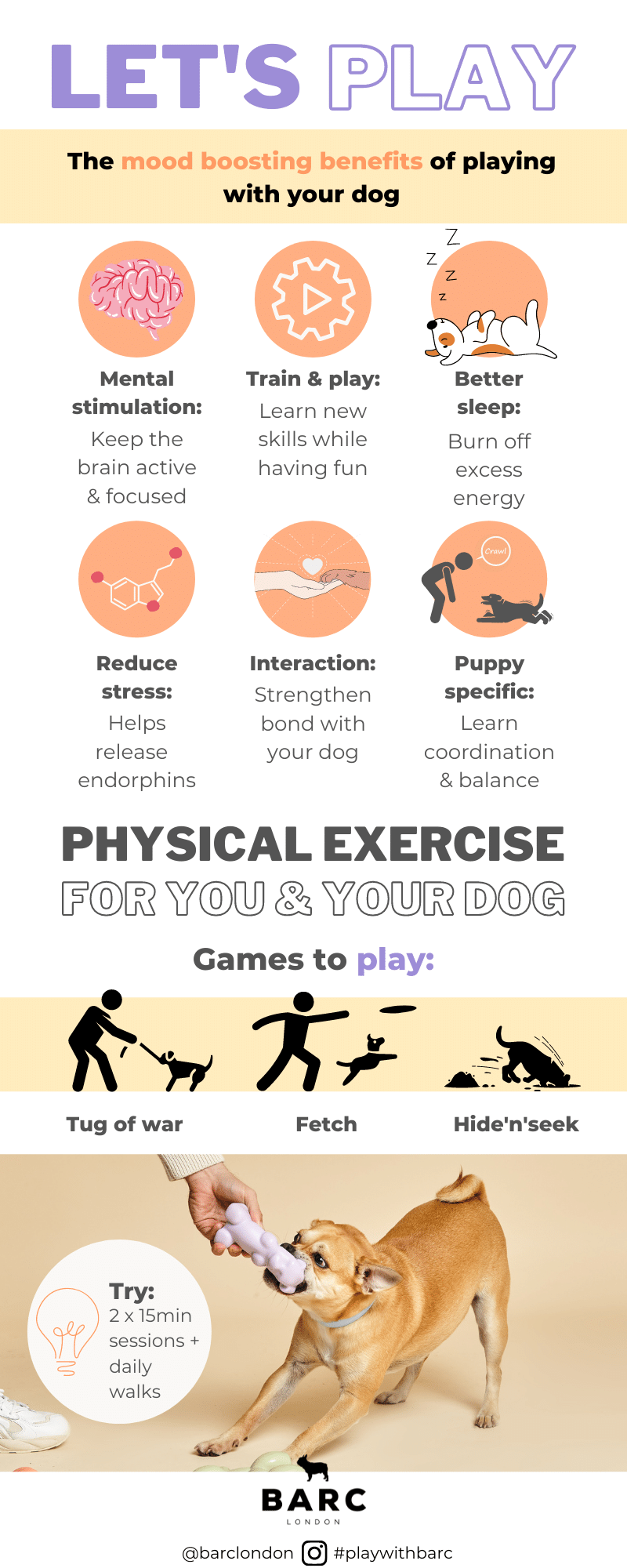
The Dog-Owner Wellbeing Loop
Fetch benefits both dog and owner. For dogs, it provides essential physical exercise and mental stimulation, helping to prevent boredom and destructive behaviors, especially for high-energy breeds.
For owners, interacting with a dog during fetch releases oxytocin, the 'bonding hormone,' which counteracts stress hormones like cortisol, promoting calm and wellbeing. The PMC study (n.d.) notes these neurochemical changes are key to the benefits of dog ownership.
Fetch also encourages physical activity for owners, improving cardiovascular health. The focused attention required can act as a form of mindfulness, offering a break from racing thoughts.
Shared joy and companionship during fetch strengthen the dog-owner bond, reducing loneliness and fostering connection.
- Physical Exercise: For the dog, a vital outlet for energy.
- Mental Stimulation: Keeps dogs engaged and prevents boredom.
- Oxytocin Release: Promotes bonding and reduces stress in both dog and owner.
- Cortisol Reduction: Counters the effects of stress.
- Increased Physical Activity: Benefits the owner's cardiovascular health.
Fetch as Social Catalyst
Fetch can be a catalyst for social interaction. Dog parks offer opportunities for owners and dogs to socialize, and even a simple game in a field can lead to encounters with other dog lovers.
Social support is important for mental health, buffering stress and providing a sense of belonging. Fetch offers a low-pressure way to start conversations and build connections with other dog owners.
Dog training classes, which often use fetch, provide a structured environment for learning and socializing, fostering community and potentially leading to friendships.
For those who enjoy connecting with others, fetch provides a natural way to build rapport over a shared interest.
Breed & Fetch: Matching Energy Levels
Certain breeds are naturally more inclined to fetch. Retrievers, like Labrador and Golden Retrievers, were bred to retrieve and have a deep instinct for chasing and bringing back objects.
High-energy breeds like Border Collies and Australian Shepherds also thrive on fetch for mental and physical stimulation, channeling their energy positively. Variety is important, and avoid overdoing it.
Even less 'fetch-focused' breeds can enjoy the game with adaptation. Smaller breeds might prefer shorter distances or smaller toys, while terriers might enjoy a tug-of-war element. Adapt the game to the dog's preferences and abilities.
Tully’s Training offers a video on fetch for retrievers (Tully’s Training, n.d.), highlighting breed-specific instincts. Understanding breed characteristics helps tailor fetch sessions for maximum enjoyment.
Breed & Fetch Suitability: A Qualitative Decision Matrix
| Breed Group | Fetch Drive | Energy Level | Training Needs | Typical Fetch Response |
|---|---|---|---|---|
| Sporting | High | High | Easy | Generally excel at fetch due to inherent retrieving instincts. Respond well to consistent training and enjoy long play sessions. |
| Herding | Medium to High | High | Moderate | Often possess a strong work ethic and can be trained to fetch, but may require redirection of herding instincts. Benefit from structured training. |
| Toy | Medium | Low to Medium | Easy | Many enjoy short fetching games, but may tire quickly. Focus on shorter distances and positive reinforcement. |
| Terrier | Medium | Medium to High | Moderate to Challenging | Fetch response varies greatly by breed. Some terriers are enthusiastic fetchers, while others are more independent and require patient, consistent training. |
| Working | High | High | Moderate | Bred for tasks requiring focus and stamina, many working breeds enjoy fetch as a mentally stimulating activity. Require consistent engagement. |
| Hound | Medium | Medium | Moderate | Fetch drive can be variable, often dependent on individual personality. Scent hounds may be easily distracted. Positive reinforcement is key. |
| Non-Sporting | Low to Medium | Low to Medium | Easy to Moderate | Fetch interest is quite diverse within this group. Some individuals enjoy a gentle game, while others show little interest. |
Illustrative comparison based on the article research brief. Verify current pricing, limits, and product details in the official docs before relying on it.
Beyond the Throw: Enriching Fetch Sessions
Fetch doesn't need to be monotonous. Adding variety and mental stimulation enhances the experience. Varying terrain, like grass, sand, or inclines, makes the game more challenging.
Hiding the ball adds a scent-work element. Puzzle toys provide extra mental stimulation. Incorporating obedience commands like 'sit' or 'stay' before throwing reinforces training and strengthens the bond.
Changing toys is important. Rotating balls, frisbees, or stuffed animals keeps things interesting and prevents boredom. Use different textures and sizes to cater to your dog’s preferences.
A bored dog misses out on fetch's mental health benefits. Aim for a stimulating and engaging experience that challenges your dog physically and mentally.
- Vary the Terrain: Grass, sand, inclines.
- Hide the Toy: Engage scent-work skills.
- Use Puzzle Toys: Add a mental challenge.
- Incorporate Obedience: Reinforce training.
- Rotate Toys: Prevent boredom.
Fetch for Older Dogs & Those with Limitations
Fetch isn't just for young dogs. Older dogs or those with physical limitations can benefit from a modified game, adapted to their individual needs and abilities. Low-impact options are essential for dogs with arthritis or limited mobility.
Shorter sessions with breaks prevent overexertion. Using a soft, easy-to-grip toy and avoiding long throws or uneven terrain helps. Focus on gentle retrieves and positive reinforcement.
undefined to a safe distance and speed.
It’s important to listen to your dog’s body language and stop the game if they show any signs of pain or fatigue. The goal is to provide gentle exercise and mental stimulation, not to push them beyond their limits. Fetch can be a wonderful way to maintain a good quality of life for dogs of all ages and abilities.
Troubleshooting Common Fetch Issues
Fetch isn’t always a seamless experience. Some dogs may exhibit problematic behaviors, such as possessiveness, running away, or refusing to bring the ball back. Addressing these issues requires patience, consistency, and positive reinforcement training.
Possessiveness can be addressed by teaching your dog a "drop it’ command. Start by offering a high-value treat in exchange for the ball. Gradually increase the difficulty by asking for the ‘drop it" command before offering the treat. Running away can often be prevented by using a long leash during fetch, allowing you to gently guide your dog back to you.
If your dog refuses to bring the ball back, try making the return more rewarding. Use enthusiastic praise, offer a treat, or engage in a quick game of tug-of-war. Avoid chasing your dog, as this can reinforce the behavior. A good rule of thumb is to make returning the ball more fun than running away with it.
Remember, positive reinforcement is key. Focus on rewarding desired behaviors rather than punishing unwanted ones. Consistency is also crucial. Practice these techniques regularly to reinforce good habits and address problematic behaviors. If you’re struggling, consider consulting with a professional dog trainer.
The Future of Fetch & Wellbeing
As our understanding of the human-animal bond continues to grow, it’s likely that we’ll see fetch increasingly recognized as a valuable tool for promoting mental wellbeing. Could fetch be formally incorporated into therapeutic interventions, perhaps as a component of animal-assisted therapy?
Future research could focus on identifying the specific physiological effects of fetch on both dogs and owners. Measuring cortisol levels, heart rate variability, and brain activity during fetch sessions could provide valuable insights into the underlying mechanisms at play. Personalized fetch programs, tailored to a dog’s breed, age, and health, are also a possibility.
We may see the development of new technologies to enhance the fetch experience, such as smart toys that track activity levels and provide personalized challenges. The potential for integrating fetch into wearable fitness trackers for both dogs and owners is also intriguing.
While it’s difficult to predict the future with certainty, one thing is clear: the connection between fetch and wellbeing is likely to become even stronger in the years to come. It’s a simple activity with profound benefits, and it’s a testament to the enduring power of the human-animal bond.



No comments yet. Be the first to share your thoughts!